
How we really build.
The part of a patio you never see decides how long it lasts. Dig down through the layers, run ten winters of weather and watch where the rain goes.
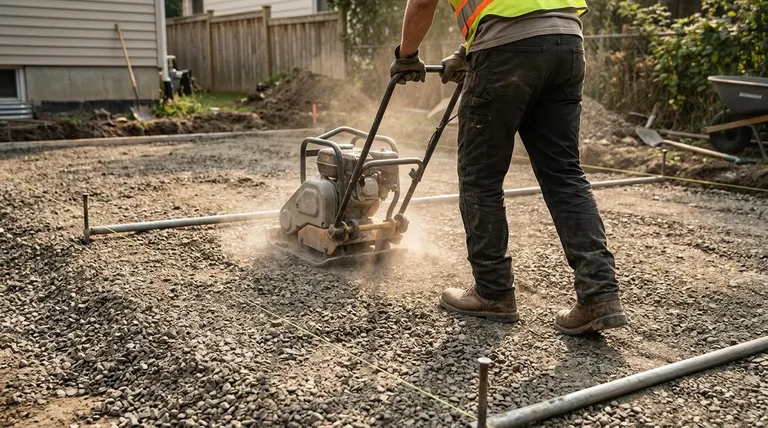
Dig down. Layer by layer.
Drag the slider to peel back each layer of a well-built paver patio and see what it does and how thick it should be.
The wear surface. Vehicle-rated pavers are thicker. Each one can be lifted and reset if the ground ever moves.
Locks the pavers together, blocks weeds and ants and keeps the surface from shifting.
A thin leveling bed. It is not a base: too much sand is how patios sink.
Crushed stone placed in lifts and compacted. This is the strength of the whole system.
Keeps clay from working up into the base stone over the years.
The ground itself. If it is soft, we remove it. Nothing built on it is better than it is.
Why the base is the whole story.
Two patios, the same pavers, a 2 in. base against a 6 in. compacted base. Slide through ten winters of Middle Tennessee rain and freeze-thaw.
Where does the rain go?
Flatten the patio, then tilt it. Add a channel drain. Make it rain.
Where does the water go?
- Standing water
- None
- Water at the foundation
- Stays dry
- Clears in about
- Seconds
The details behind the look.
Dig to firm ground
Soft soil is removed, never built over.
Compact in lifts
Each layer of stone is compacted before the next.
Slope everything
Surfaces fall away from the house at about 1/8 to 1/4 in. per foot.
Restrain the edges
Pavers cannot creep when the edges are locked.
Check with string and level
Flat is measured, not guessed.
Get your number
A free visit turns all of this into one written proposal. Ask for my estimate
How it is built: common questions
How deep should the base be?
Four to six inches of compacted crushed stone is common for patios and walkways, eight to twelve inches for driveways, adjusted for soil and use. The depth is less important than the compaction: stone is placed in lifts and compacted before the next goes on.
Will my patio sink or heave?
Not when it is built right. Sinking comes from a thin or uncompacted base or from water washing out the soil, and heaving from water freezing in the base. We build on compacted stone, separate clay with fabric where needed and plan drainage first.
Can you fix a yard that stays wet?
Usually, yes. We trace where the water comes from, regrade where needed and install French drains, channel drains, downspout lines, dry creek beds or rain gardens, with a safe outlet designed first.
See how we would build yours.
A free visit, a scaled plan and a written proposal that spells out the base.