
The stone matchmaker.
Seven popular surfaces, ranked live by what matters to you: cost, lifespan, upkeep, cool feet and character. Then see real project photos of each.
- Live ranking
- 7 materials
- Free, no signup
What matters most to you?
Slide each priority from 0 (does not matter) to 3 (matters a lot). The ranking updates as you move.
Every material has its own page.
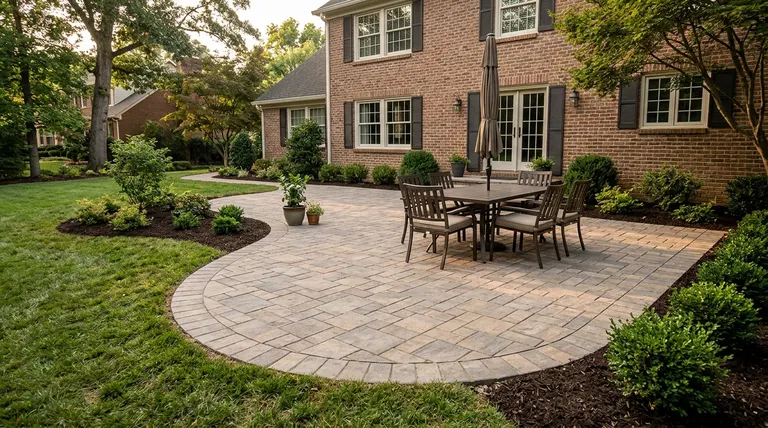 Patios & Outdoor RoomsPaver PatiosThe patio that still looks new in ten winters.
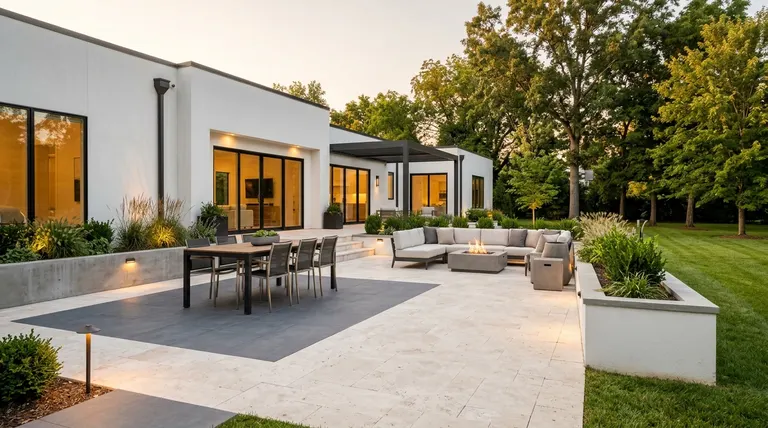
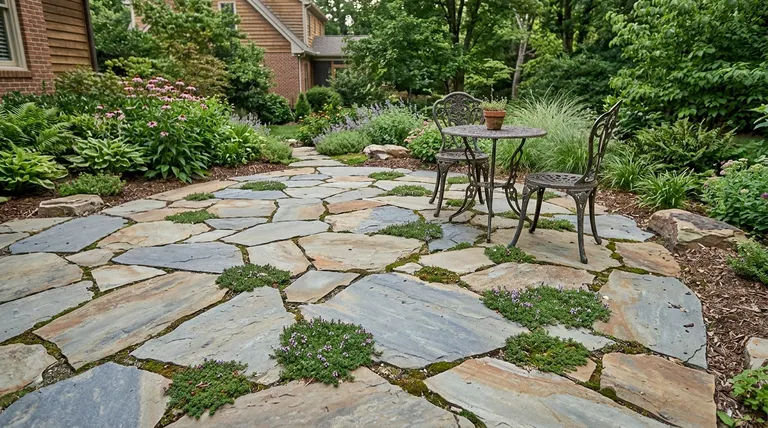 Patios & Outdoor RoomsFlagstone PatiosEvery stone different, every joint intentional.Patios & Outdoor RoomsTravertine & Porcelain PatiosModern lines, comfortable in July.
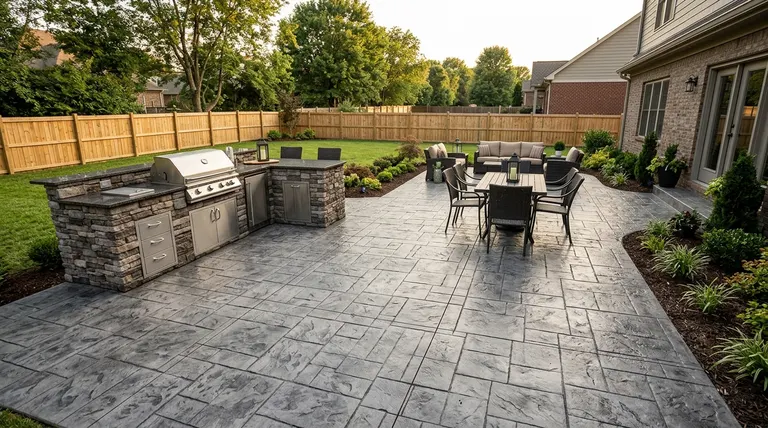 Patios & Outdoor RoomsStamped & Colored Concrete PatiosThe look of stone on a poured surface.
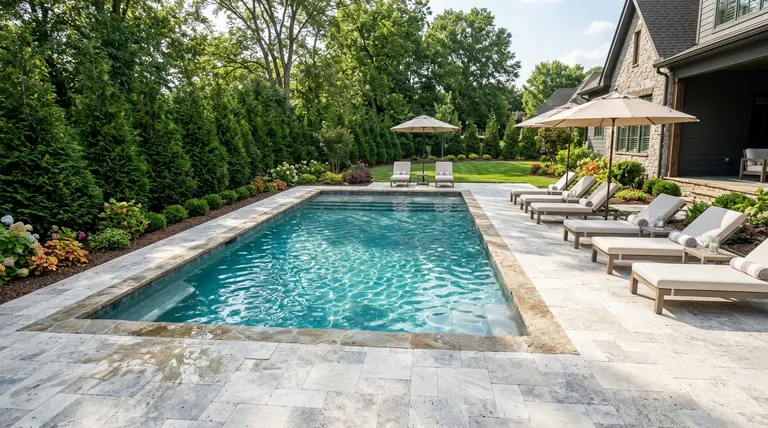 Patios & Outdoor RoomsPool Decks & SurroundsBarefoot-friendly from the first splash.
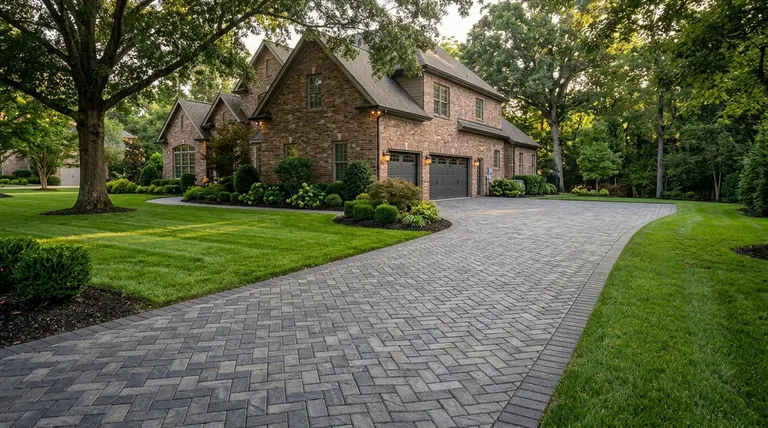 Driveways & ParkingPaver DrivewaysCurb appeal that can take a pickup.
What matters more than the material.
The base
Compacted stone beneath any surface decides how long it lasts.
Drainage
Water that has nowhere to go will move any material.
Edges
Restraint keeps pavers and stone from spreading.
Installation skill
Cuts, joints and levels are visible in every material.
Material questions
Pavers, poured concrete or natural stone: which is best?
Concrete costs least upfront and is hardest to repair invisibly. Pavers flex with the ground and can be repaired piece by piece. Natural stone has unmatched character and costs the most. Our Stone Matchmaker ranks the options by what matters to you.
How long will a paver patio last?
A patio built on a deep, compacted stone base with edge restraint and good drainage commonly lasts for decades, and any paver can be lifted and reset if the ground ever moves. Patios that fail early almost always have a thin base or a water problem, which is why we show you the layers, not just the surface.
How deep should the base be?
Four to six inches of compacted crushed stone is common for patios and walkways, eight to twelve inches for driveways, adjusted for soil and use. The depth is less important than the compaction: stone is placed in lifts and compacted before the next goes on.
Hold the samples in your hand.
We bring real samples to your yard so you can see them in your own light.